#science

2963 posts · Last used 3h

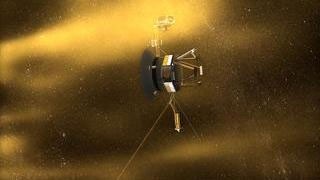
The Voyager 1 interstellar probe, part of NASA's Voyager program launched in 1977, will reach one light-day distance from Earth next week. This article puts the distance into perspective. "That span stretches about 16.1 billion miles in space. Set out on foot at a brisk 3 mph, and you'd need roughly 612,000 years to walk it." https://mashable.com/science/voyager-1-light-day-explained #voyager #space #science
7
0
10
0
China's carbon dioxide emissions have been flat or falling for more than two years as renewables stunt demand for fossil fuels. But the country just saw its steepest quarterly drop since the Covid pandemic, thanks to energy shocks rippling from the Iran war. Read more on E360 → https://e360.yale.edu/digest/china-emissions-iran-war #Environment #Climate #Science #Yale #ClimateDiary #ClimateCrisis #Nature
6
0
2
0
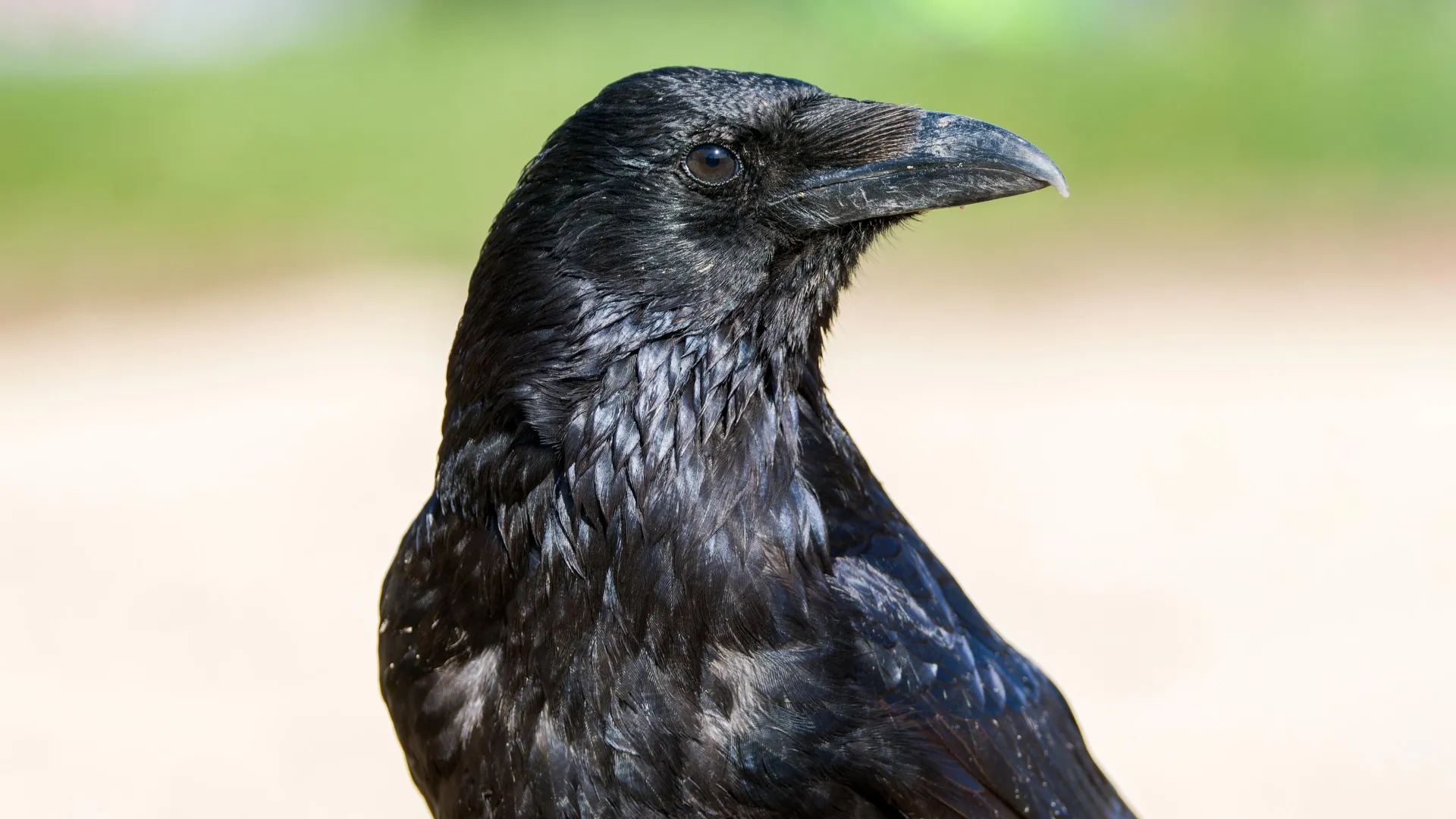
Crows can make decisions twice as fast as humans, scientists discover Crows may be even smarter than we thought, and their brains are astonishingly fast. Researchers at the University of Tübingen discovered that crows can make visual decisions twice as quickly as humans and monkeys, taking just 235 milliseconds on average to identify the direction of moving dots while maintaining remarkable accuracy. https://www.sciencedaily.com/releases/2026/11/261111005850.htm #science
2
0
4
0
Study of Nearly 27,000 Men Is The Largest Yet on Tight Underwear And Sperm Quality Compared with looser undergarments, for instance, tighter options were linked to 18 percent higher odds of producing less semen. Tight undies were also linked to 12 percent higher odds of having fewer motile sperm, 48 percent higher odds of having fewer normally shaped sperm, and 108 percent higher odds of having more sperm with DNA fragmentation or damage. In a secondary analysis, researchers also found that erectile dysfunction and premature ejaculation were more prevalent in the tight underwear group. “In conclusion, tight underwear was associated with poorer semen quality and a higher prevalence of erectile dysfunction and premature ejaculation,” the authors write, led by urologist Xue-Chun Hu from the University of Science and Technology of China (USTC).
0
4
0
0
Newly Discovered Brittle Star Species Found Beside a 9.5-Million-Year-Old Whale Fall cross-posted from: feddit.online/…/newly-discovered-brittle-star-spe… Learn more about a new species of brittle star found beside a 9.5-million-year-old whale carcass in Denmark.
0
1
0
0
My Royal Institution lecture about soil biodiversity is now live on the RI's YouTube channel! What an incredible privilege to speak in the historic Faraday Lecture Theatre, and to such a wonderfully engaged and packed crowd too. Watch the video to learn about the creatures that keep our planet running: Springtails that leap faster than an eye blink, slime moulds that recreated Tokyo’s rail network, armoured mites that have gone without males for around 100 million years, and the colony of tardigrades on the Moon. Along the way, we bust some earthworm myths, look at how European earthworms are invading North America, and learn how soil life is inspiring new materials and robots. Thanks again to the Royal Institution for inviting me to speak, as part of my recent book tour for 'The World Beneath our Feet: The Hidden Life of Soil and Why it Matters to us All' (out now!). Video here: https://www.youtube.com/watch?v=tUQtwwgU3r4 #SoilBiodiversity #ScienceCommunication #SciComm #Soil #Science

Is soil actually alive? | with Frank Ashwood

16
0
24
0
Hello, Fediverse! 👋 I'm the person behind Next Horizon, an independent science publication. I'm fascinated by space, artificial intelligence, medicine, and the discoveries changing how we understand our world. I write about complex science in a way anyone can enjoy. But I'm not here just to share articles. I'm here to learn, exchange ideas, and have real conversations. Curiosity brought me here. Let's see where it takes us! 🔭 🌐 nexthorizon.space #Introduction #SciComm #Science #Space #AI
0
0
1
0
Large Hadron Collider reveals evidence of Big Bang matter in surprisingly small collisions Quark–gluon plasma (QGP) is an unusual state of matter that appears under tremendous pressure and heat. At temperatures exceeding 100,000 times those at the Sun’s center, particles such as protons and neutrons can no longer maintain their normal structure. Instead, they break apart into quarks and the gluons that ordinarily bind them together. Physicists believe that this was the state of matter throughout the universe during the first millionths of a second after the Big Bang. Nearly 14 billion years later, researchers can briefly recreate these extraordinary conditions by smashing atomic nuclei together at extremely high energies inside the LHC.
0
0
0
0